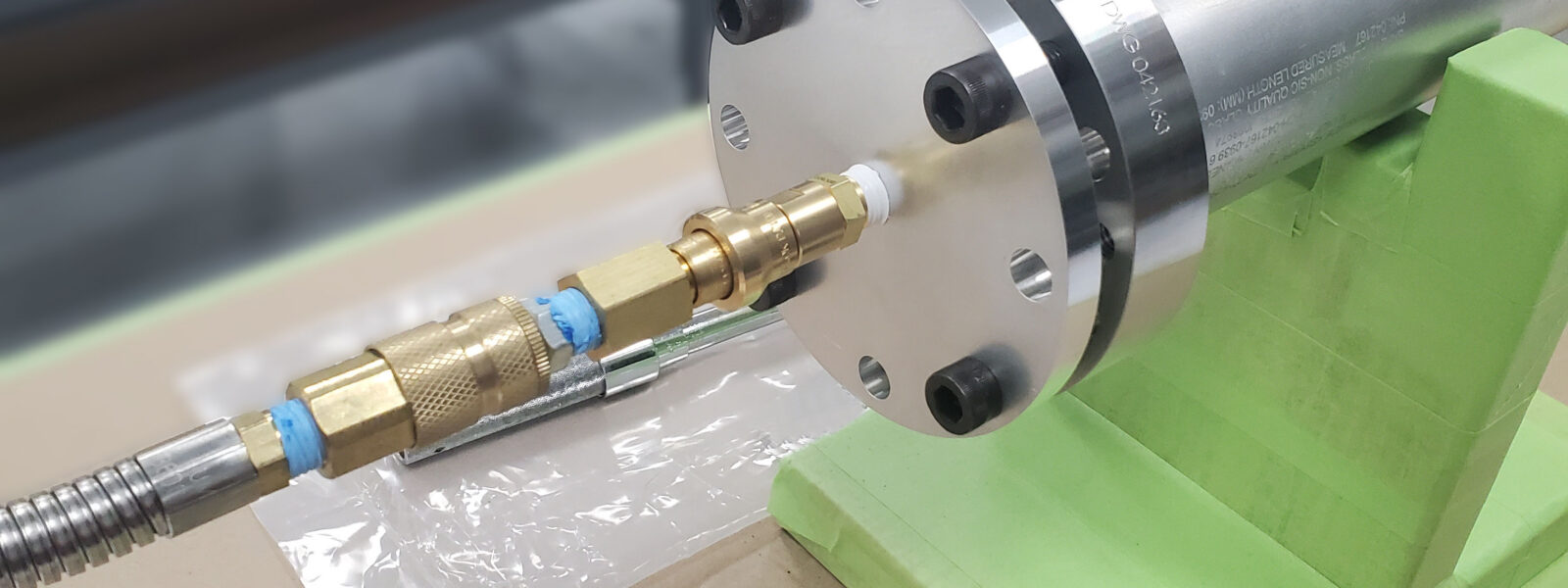
 A waveguide component at Teledyne Brown Engineering Inc. in Huntsville, Alabama, undergoes testing. Credit: US ITER/Teledyne Brown Engineering.
The plasma heating team at US ITER has begun production of nine of 10 major components of the electron cyclotron heating (ECH) transmission lines.
As of September, manufacturing is complete for the direct-current (DC) breaks, which have been delivered and accepted by the ITER Organization. Eight other major components are now in production, with some deliveries already shipped to the ITER site: waveguides, 140-degree miter bends, 90-degree miter bends, expansion units, pumpouts, and adapters that ensure vacuum-tight connections between matching optics units and transmission lines.
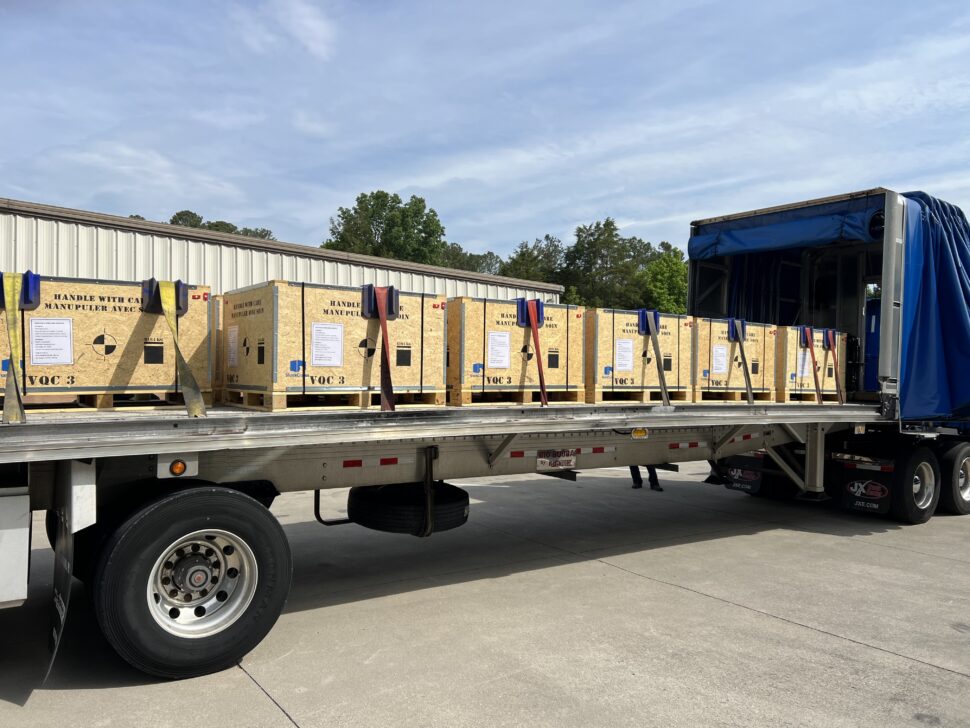
For the remaining major components, shipping is expected to begin for switches and radio frequency load components in the coming months, with the polarizer miter bend, the final component, to begin testing in 2027.
“After years of design and prototyping, it’s fulfilling for our team to be at this stage of manufacturing,” said Ben Hardy, US ITER’s plasma heating team manager.
The technology that the United States is delivering supports the full ITER electron cyclotron resonance heating system. This system helps to initiate and control the plasma by delivering high-intensity beams of microwave radiation using a unique range of power, pulse length, and microwave frequency. The US-built lines will carry the high-intensity beams between the power sources and vacuum vessel port plugs and are designed to minimize power losses and microwave mode changes.
“To get here, our team has tackled complex engineering challenges, working closely with our manufacturers across country, from South Carolina to Ohio to California,” Hardy said. “The precision manufacturing capability that we’ve developed has enabled world-leading performance and is laying the groundwork for fusion in the United States.”
Industry contributors across the U.S. have fabricated prototypes, provided specialized materials, and manufactured components, including ARMEC Corp. in Oak Ridge, Tennessee; Dymenso LLC in San Francisco, California; General Atomics in San Diego, California; Keller Technology Corp. in Tonawanda, New York; Lisega, Inc. in Kodak, Tennessee; Precision Fabricating & Cleaning Inc., in Cocoa, Florida; Rhinestahl AMG in Mason, Ohio; Technetics Group in Columbia, South Carolina; Teledyne Brown Engineering Inc. in Huntsville, Alabama; and Vacuum Technology Inc. in Oak Ridge, Tennessee. Others who contributed during early design stages include Metaflex in Newport, Vermont; High Energy Metals Inc. in Sequim, Washington; and IBC Advanced Alloys in Franklin, Indiana. International contributors have included Curti Costruzione Meccaniche S.p.A in Castel Bolognese, Italy, and the EPFL Swiss Plasma Center in Lausanne, Switzerland.
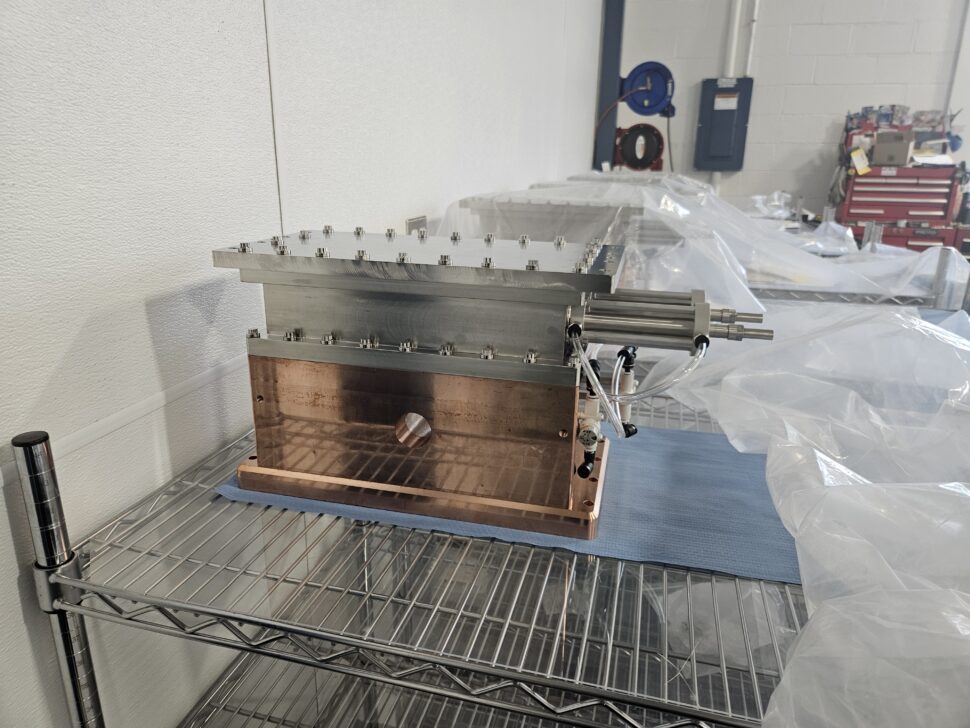
Next steps for the US ITER electron cyclotron transmission line team are to finalize prototyping and testing of the polarizer miter bend while continuing manufacture and shipment of the remaining major components, as well as smaller parts, which number in the thousands—such as the 20,000 coupling bolts needed for assembly.
See article.